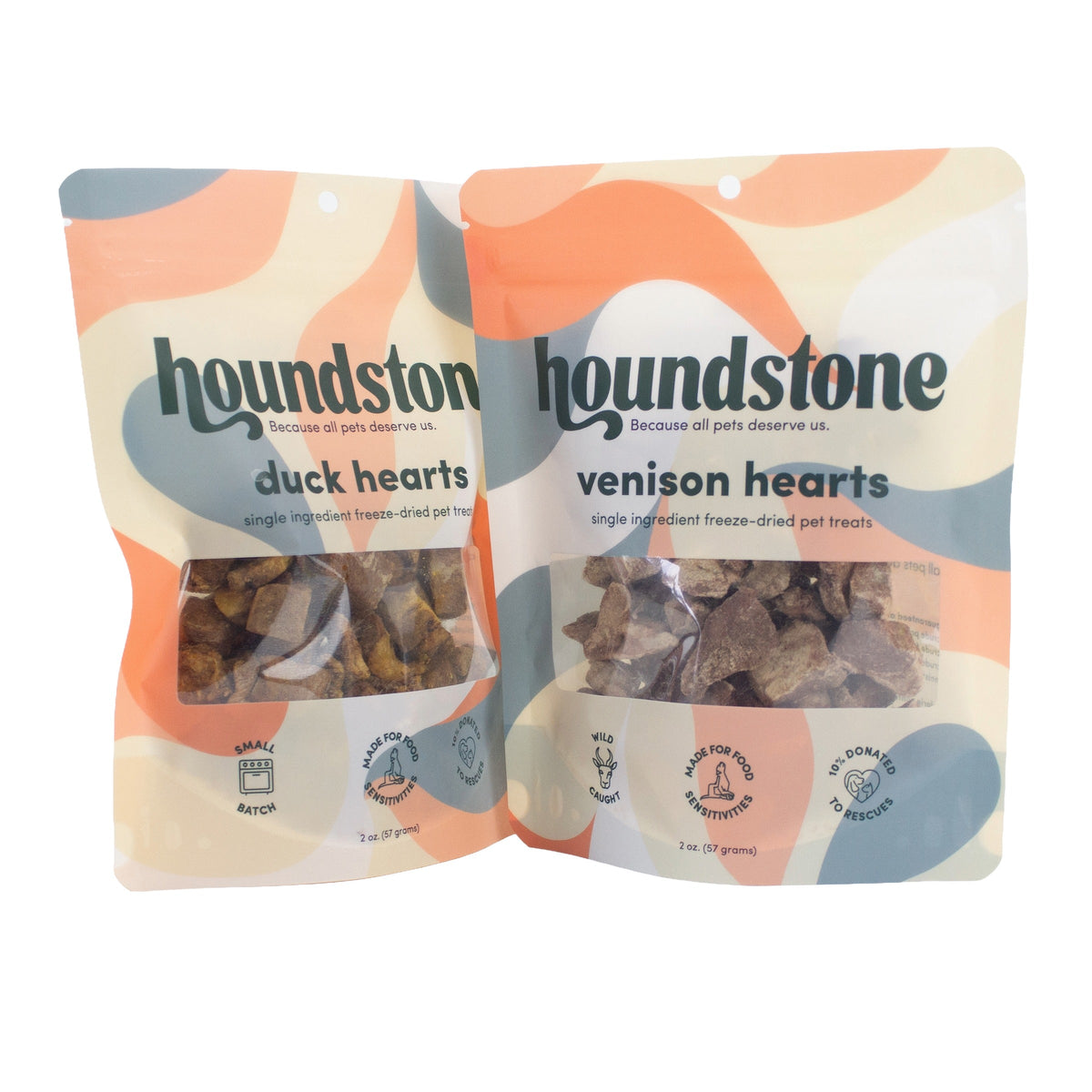
For dogs with food allergies or sensitivities, novel protein dog treats can offer a simple way to enjoy rewarding moments without some of the ingredients that may cause discomfort.
A novel protein is simply an animal protein your dog hasn't eaten before. Proteins like antelope, wild boar, bison, and venison are less common in everyday dog foods, making them worth considering for dogs who need alternatives to familiar ingredients like chicken or beef.
Because food allergies involve an immune response to certain proteins, choosing a protein your dog hasn't previously eaten may help avoid known triggers. The key is understanding your dog's individual dietary history and choosing ingredients that work for them.
Key Facts About Novel Protein Dog Treats
-
Novel proteins are different for every dog. A protein is considered novel only if your dog hasn't eaten it before.
-
Food sensitivities can have different causes. Some dogs develop allergies to proteins found in common ingredients such as beef, chicken, or dairy.
-
Certain ingredients are more frequently reported as allergens. A 2016 review of 297 dogs with confirmed adverse food reactions identified beef, dairy, chicken, and wheat as the most commonly reported triggers.
-
Identifying a food allergy takes time. Veterinarians typically recommend a carefully managed elimination diet lasting at least eight weeks, followed by a food challenge.
-
Treats are part of the diet, too. During an elimination trial, every treat and chew needs to fit the feeding plan recommended by your veterinarian.
-
Simple ingredients make choosing easier. Single-ingredient treats let you know exactly which animal protein you're giving your dog.
What Is a Novel Protein?
A novel protein is an animal protein that's new to your dog's diet. While many dogs regularly eat chicken, beef, lamb, or fish, proteins such as antelope, wild boar, bison, and venison are less commonly found in traditional dog foods.
For dogs with certain food sensitivities, these less familiar proteins can offer a welcome alternative.
But what's considered novel depends entirely on your dog. If your dog has been eating venison-based food for years, for example, venison is no longer a novel protein for them.
That's why it's helpful to look at your dog's full diet, including meals, treats, and chews, before introducing something new. The goal isn't necessarily to find the most unusual protein, but to find one that agrees with your dog.
Which Proteins Most Often Cause Food Allergies in Dogs?
Food allergies can develop when a dog's immune system reacts to an ingredient in their diet, often a particular protein.
A 2016 review published in BMC Veterinary Research by Mueller, Olivry, and Prélaud examined reported food allergens in 297 dogs with confirmed adverse food reactions.
The most commonly identified ingredients were:
| Food allergen | Share of 297 dogs |
|---|---|
| Beef | 34% |
| Dairy products | 17% |
| Chicken | 15% |
| Wheat | 13% |
| Soy | 6% |
| Lamb | 5% |
| Corn | 4% |
| Egg | 3% |
| Pork, fish, rice | 2% each |
These findings don't mean that these ingredients are unhealthy or that every dog should avoid them. They simply reflect the allergens most frequently identified in the dogs included in the research.
Some ingredients also appear more often because they're commonly used in dog food. A dog that has never eaten a particular protein may be less likely to have developed a sensitivity to it, although no protein is guaranteed to be allergy-free.
Signs Your Dog May Have a Food Allergy
Food sensitivities don't look the same in every dog. Some show changes in their skin, while others experience digestive discomfort.
Common signs can include:
-
Frequent itching, particularly around the paws, ears, face, or rear end
-
Recurring ear or skin infections
-
Excessive licking or chewing of the paws
-
Digestive changes, including soft stools, gas, or occasional vomiting
These symptoms can have several causes, including environmental allergies, so it's important to work with your veterinarian to understand what's behind them.
How Do Veterinarians Identify Food Allergies?
Identifying a food allergy takes a little patience. Veterinarians typically recommend an elimination diet, where your dog eats a carefully selected novel protein or hydrolyzed diet for at least eight weeks.
If symptoms improve, previously eaten foods may be reintroduced under veterinary guidance to identify the trigger.
During this process, every treat matters. Even a small amount of an ingredient outside the trial diet can affect the results. Single-ingredient treats make it easier to know exactly what you're feeding, but any treats offered during an elimination diet should be approved by your veterinarian.
Why Choose Single-Ingredient Novel Protein Treats?
Sometimes the simplest ingredients are the best place to start, especially for dogs with food sensitivities.
-
Nothing unnecessary: Just one animal protein, without added fillers, grains, or artificial flavors.
-
Easy to choose: Find proteins that fit your dog's individual dietary needs.
-
Naturally rewarding: Freeze-dried meats have a rich aroma and flavor dogs love, making them great for training.
-
Easy to keep track of: Knowing exactly what's in each treat makes it simpler to monitor how your dog responds.
Houndstone novel protein treats
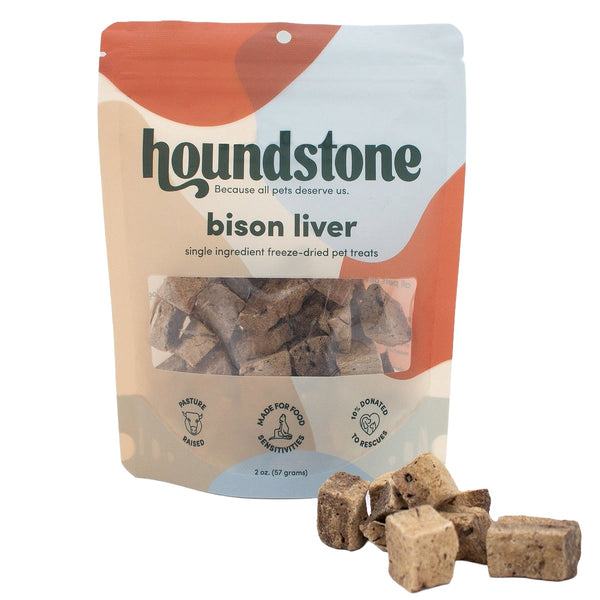
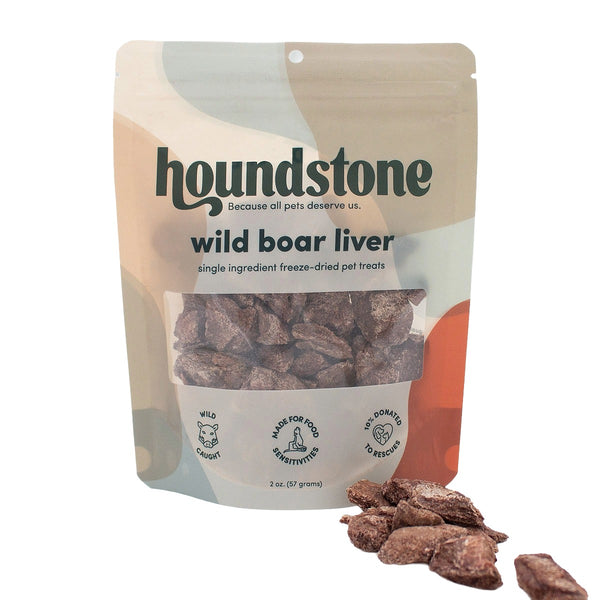
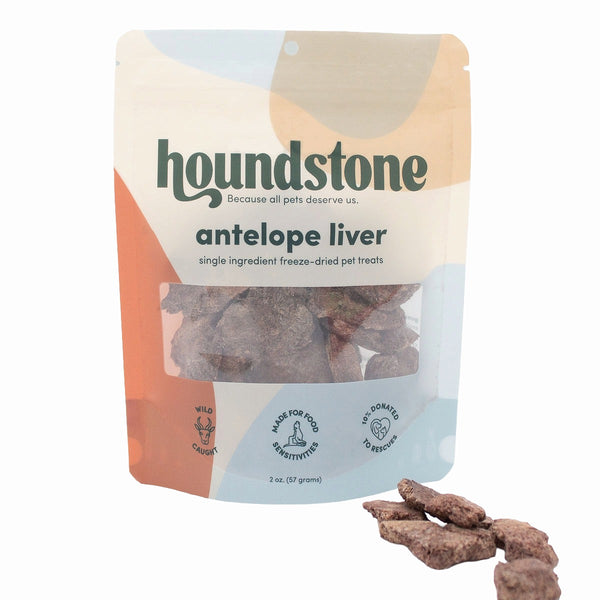
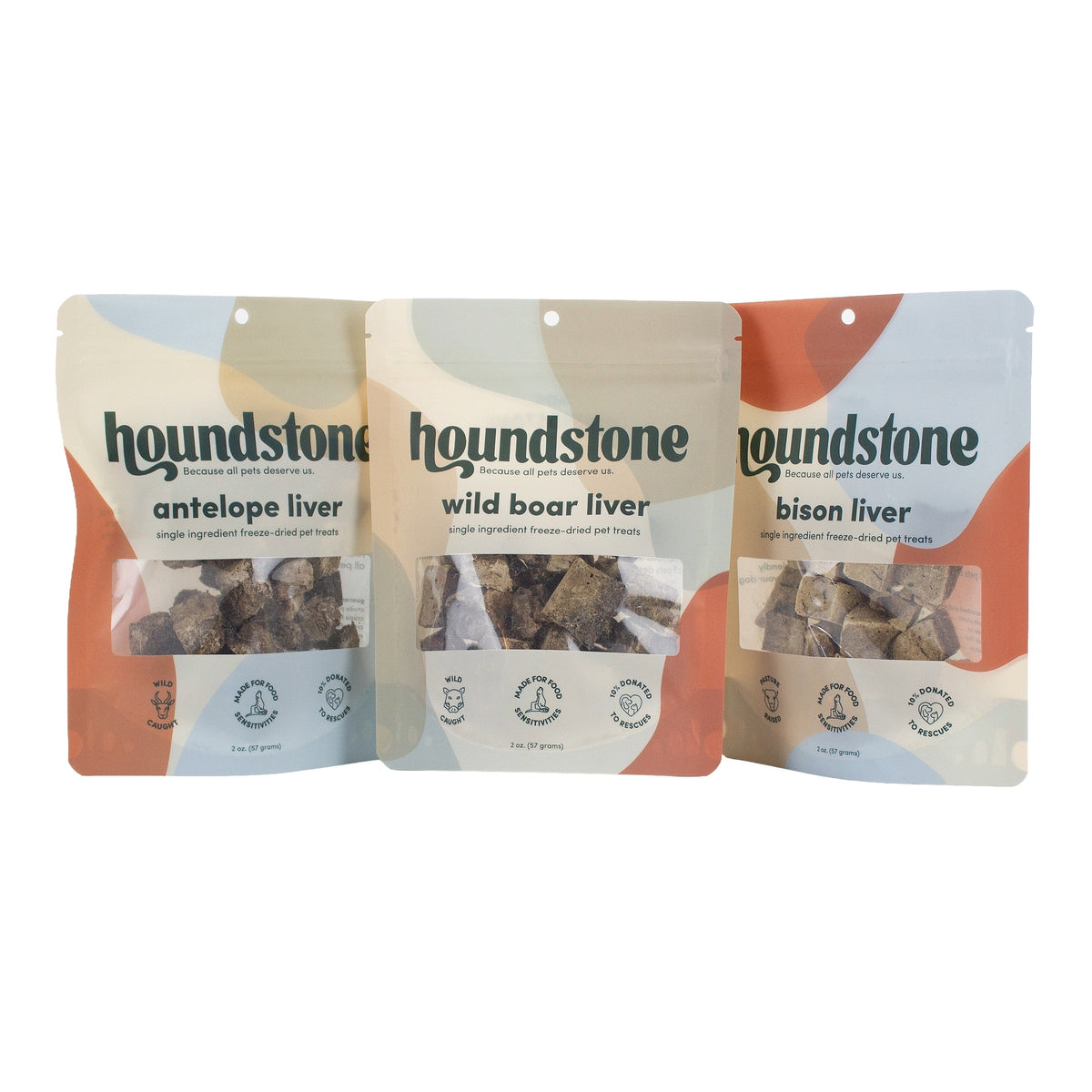
Every Houndstone freeze dried dog treat is a single animal protein, freeze dried raw. Figures below are minimum crude protein from each product's guaranteed analysis.
| Treat | Protein source | Cut | Crude protein (min) |
|---|---|---|---|
| Antelope Liver | Antelope | Liver | 66% |
| Wild Boar Liver | Wild boar | Liver | 70% |
| Bison Liver | Bison | Liver | 60% |
| Red Tail Deer | Deer | Meat | 93% |
| Venison Hearts | Venison | Heart | 81% |
| Duck Hearts | Duck | Heart | 52% |
Duck is poultry. Some dogs that react to chicken also react to other birds, so ask your vet before using duck for a chicken-allergic dog. For a non-meat option, Mussel Crunch is a limited-ingredient dehydrated treat made from mussels, blueberries and kelp.
How to choose a novel protein treat
- List everything your dog has eaten: food, treats, chews, dental sticks and table scraps.
- Cross off familiar proteins: anything on that list is not novel for your dog.
- Talk to your vet: especially if your dog is on, or about to start, an elimination diet.
- Pick one protein at a time: introduce a single new treat and watch for two weeks before adding another.
- Keep treats to 10% of daily calories: the rest should come from a complete and balanced diet.
New to freeze dried treats? Read Freeze dried dog treats: the complete guide, how they compare in freeze dried vs dehydrated dog treats, and what vets say in are freeze dried dog treats safe?
Frequently Asked Questions
What Is the Best Protein for Dogs with Allergies?
The best protein is one your dog tolerates well. Novel proteins like antelope, wild boar, bison, and venison may be good options for dogs who need alternatives to common proteins like chicken or beef. Your veterinarian can help you choose.
Is Venison a Novel Protein for Dogs?
Venison can be a novel protein if your dog hasn't eaten it before. Since it's now found in some commercial dog foods, check your dog's dietary history before choosing it.
Can I Give My Dog Treats During an Elimination Diet?
Yes, as long as your veterinarian approves them. Treats should fit the elimination diet so they don't interfere with identifying potential food allergies.
Is Duck a Good Alternative for Dogs with Chicken Allergies?
Sometimes. Duck and chicken are both poultry, and some dogs may react to both. Check with your veterinarian to see if duck is a good choice.
How Long Does It Take to Know if a New Protein Agrees with My Dog?
Introduce new treats gradually and watch for changes in digestion, skin, or overall comfort over the following days and weeks. For diagnosing food allergies, veterinarians typically recommend an elimination diet lasting at least eight weeks.
Sources
- Mueller RS, Olivry T, Prélaud P. Critically appraised topic on adverse food reactions of companion animals (2): common food allergen sources in dogs and cats. BMC Veterinary Research, 2016
- Olivry T, Mueller RS, Prélaud P. Critically appraised topic on adverse food reactions of companion animals (1): duration of elimination diets. BMC Veterinary Research, 2015
- American Kennel Club: How many treats should I give my dog?
Last updated November 2026. This guide is general information, not veterinary advice. Talk to your vet about your dog's allergies.