Pet Care Tips & Guides | Houndstone Blog


Freeze-Dried vs. Dehydrated Dog Treats: What's the Difference?
Freeze dried treats are frozen and dried under vacuum; dehydrated treats are dried with warm air. How they differ in texture, nutrition, safety and price, and when to choose each.
Learn more
Are Freeze Dried Dog Treats Safe? What Vets and the FDA Say
Freeze drying removes water but does not reliably kill bacteria. Here is what the FDA, AVMA and Cornell say about freeze dried dog treats, who should take extra care, and how to handle them safely.
Learn more
What Are Freeze-Dried Dog Treats? A Simple Guide for Dog Parents
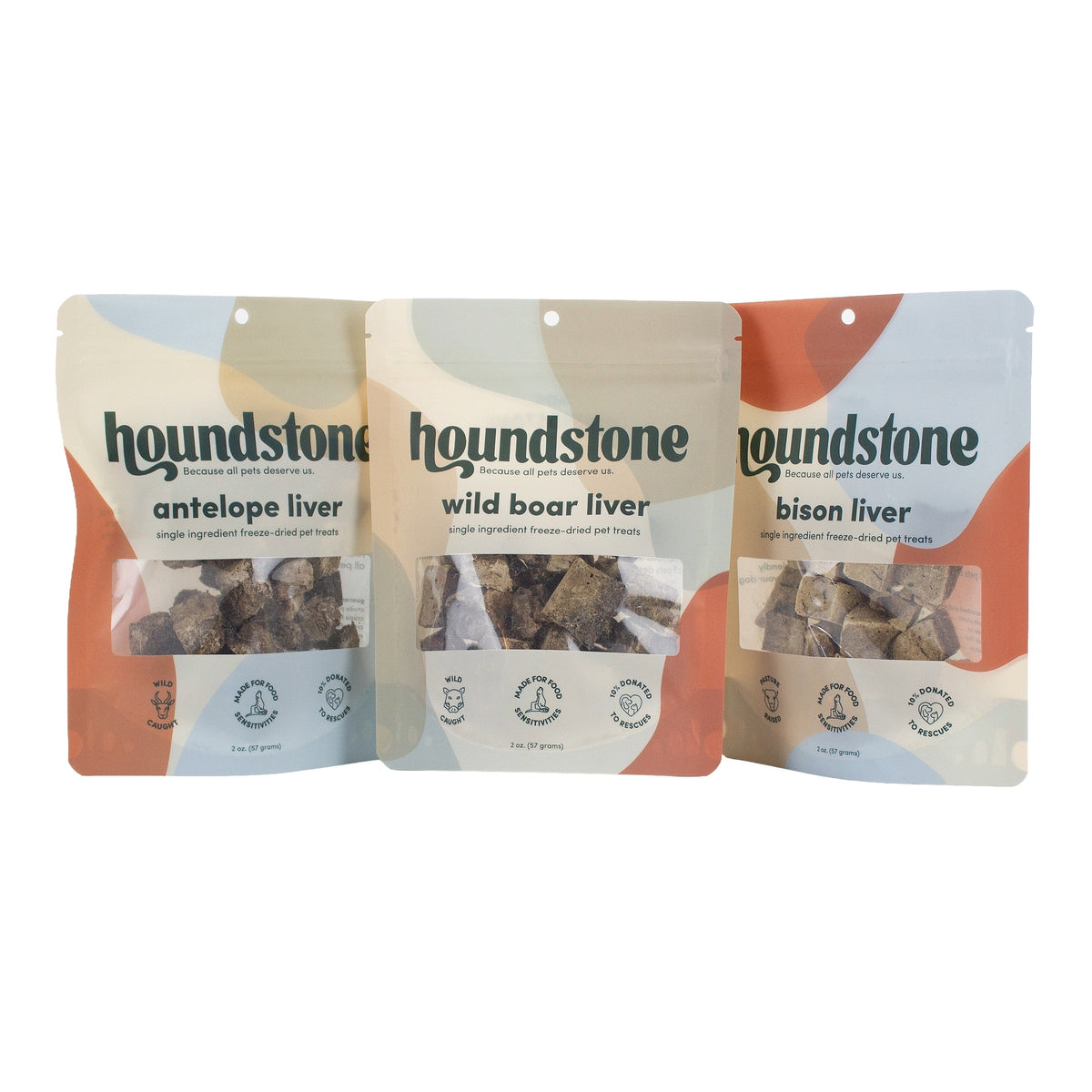
What freeze dried dog treats are, how they are made, how they compare with dehydrated and baked treats, how many to feed, and how to choose a single-ingredient novel protein.
Learn more
Interactive Dog Toys: What They Are, How to Choose, and How to Use Them Well
“Interactive” can mean a lot of things in the dog toy aisle. Sometimes it’s a puzzle. Sometimes it’s a toy that makes noise. Sometimes it’s a plush that your dog carries everywhere and brings back to you for the next round. For most pet parents, the goal is simple: give your dog something that meets a real need—movement, problem solving, connection, comfort—without turning your home into a pile of half-used toys. This guide breaks interactive dog toys down into clear categories, shows how plush dog toys and a squeaky dog toy can fit into a calmer routine, and helps you choose based on your dog’s actual play style. Fewer, better essentials. What “interactive” actually means (and what it doesn’t) A truly interactive toy does at least one of these: Invites decision-making (your dog has to figure something out) Rewards engagement (movement, scent work, or a treat/goal at the end) Creates connection (the toy is a bridge between you and your dog) What it shouldn’t mean: “louder,” “more complicated,” or “buy more things.” Interactive is about purpose, not features. The three types of interactive play 1) Food-based problem solving These are the classics: puzzles, treat-dispensing toys, snuffle mats, lick-based enrichment. They can help: slow down fast eaters give busy brains a job support calmer downtime after walks Use them intentionally. Start easy, increase difficulty slowly, and keep sessions short if your dog gets frustrated. 2) Hunt + search games Not every dog wants a puzzle. Many dogs want a mission. Simple “hunt” interaction can look like: hiding a toy in another room tossing a treat gently into a towel fold (supervised) short “find it” games that end with a calm reward This kind of interactive play often works well for dogs who get overstimulated by constant squeaking or rough tug. 3) Play-with-you interaction For a lot of dogs, the most interactive dog toy is the one that reliably brings you into the moment. That can be: a toss-and-retrieve toy a tug shape (when appropriate for your dog) a plush your dog loves returning to you It’s less about intensity and more about rhythm: a few minutes of play, then a clean finish. Where plush dog toys fit in Plush dog toys get dismissed sometimes because they’re “soft.” But softness can be the point. Plush can be interactive when it supports: comfort play (carry, cuddle, settle) retrieve play (bring it back, repeat) gentle engagement (for seniors or sensitive dogs) For pet parents searching “dog plush” or “dog stuffed animals,” the question is usually: Will my dog love it, and will it last long enough to feel worth it? A good plush choice comes down to two things: matching the plush to your dog’s intensity level supervising if your dog tends to shred or ingest pieces Plush isn’t automatically “less enriching.” It’s just a different kind of enriching. Squeaky dog toy basics: when squeakers help, when they don’t A dog squeaky toy can be fantastic for motivation—especially for dogs who love chase, pounce, and quick bursts of play. A squeaker can help when: your dog needs encouragement to engage you’re using it for short, structured play sessions it’s part of a reward loop (play → pause → calm) A squeaky toy may not help when: your dog gets overstimulated and can’t settle afterward your dog obsessively hunts the squeaker to remove it the squeaking escalates frustration rather than focus The rule of thumb: squeak should support regulation, not derail it. How to choose safely by play style Use your dog’s play style as the filter, not the label on the packaging. Gentle mouther: plush dog toys, comfort shapes, soft textures Shaker: sturdier shapes, fewer dangly parts, supervised play “Squeaker surgeon”: squeaky dog toy only with supervision; retire if exposed Shredder: plush as a short-session toy; rotate often; remove at first tearing Sensitive/senior dogs: calmer interactive options (scent games, gentle plush, low-noise play) No toy is “one size fits all.” The best choice is the one that fits how your dog actually plays today. Made with restraint. Chosen with intention. A simple weekly toy rotation that reduces chaos A rotation keeps toys interesting without buying more. Try this: Keep 4–6 toys out at a time 1 plush (comfort or retrieve) 1 interactive (puzzle/snuffle/lick) 1 movement toy (toss/tug style) 1 squeaky dog toy (optional, based on your dog) Put the rest away. Swap 2 toys each week. This reduces clutter, keeps novelty high, and makes wear-and-tear easier to notice early. The Houndstone approach: fewer toys, better play We believe pet parents shouldn’t have to second-guess what they bring home. Toys should support real life: daily play, calmer routines, and pieces that are meant to be used—not collected. That’s why we think about toys through a simple lens: Does it serve a real need for the dog? Will it hold up to the way dogs actually play? Is it built with restraint—no extra parts just to look busy? Thoughtful materials. Honest sourcing.
Learn more
Cat Bowls for Whisker Fatigue: A Practical Guide for Cat Parents
Cats are precise. They notice when a bowl slides, when the rim presses against their whiskers, when food gets pushed to the edges, and when the feeding area feels messy or overstimulating. If you’re searching for cat bowls that feel better for your cat and work better for your day-to-day, there are a few details worth paying attention to. The right cat food bowls can support comfort at mealtime, and the right setup can make cleanup feel effortless instead of constant. Below is a straightforward guide to bowl shape, whisker fatigue, and why a cat food mat is often the missing piece. Why cat bowl design matters more than it seems Most cats don’t just “eat.” They evaluate the whole experience. A bowl that doesn’t suit your cat can lead to behaviors like: eating a few bites and walking away pawing food out of the bowl hovering over meals, then backing off preferring to eat from a flat surface Sometimes it’s preference. Sometimes it’s comfort. Either way, the bowl is part of the conversation. Whisker fatigue: what it is, and what helps Whiskers (vibrissae) are sensitive sensory tools. They help cats interpret their environment, navigate tight spaces, and gauge proximity. When a bowl is too narrow or too deep, whiskers can brush the sides repeatedly while a cat eats. Some cats tolerate that easily. Others find it irritating or overstimulating, and may change how they approach food. A whisker-friendly bowl tends to be: wider (more room for whiskers) shallower (easier access to food) soft-edged or gentle where contact happens stable, so the bowl doesn’t move as your cat adjusts position If you suspect whisker fatigue, switching to a wider, gentler bowl is one of the simplest changes you can make. What to look for in cat food bowls 1) Shape that supports natural eating Wide and approachable usually works best. It lets cats eat without pressing their face into a narrow space, and it makes it easier to reach the last bites without frustration. 2) Stability for calmer meals A bowl that slips or tips creates noise and stress. Stability is especially important for cats who eat enthusiastically or push food around. 3) Materials that fit real life Daily feeding demands practical cleanup. Choose cat food bowls that are easy to wash and durable enough to handle everyday use without chipping or breaking. If you prefer a softer, quieter material in the home, flexible silicone can be a strong option—especially when it’s made from food-grade, BPA-free silicone and designed for repeated washing. 4) Cleanability that keeps routines simple Microwave-safe and dishwasher-safe options can make a real difference when you’re feeding multiple times a day. The best bowl is the one that stays in rotation because it’s easy to keep clean. Why pairing cat bowls with cat food mats works A cat food mat isn’t about making the setup more complicated. It’s about containing the mess so your feeding station feels calm and easy. A good cat food mat helps: keep bowls from sliding catch crumbs and splashes protect floors and surfaces make cleanup quick (wipe down or rinse) For “spirited” eaters, a mat often does as much work as the bowl. A calm, clean feeding station (simple setup) If you want a feeding station that looks good and functions well, keep it simple: one whisker-friendly bowl for food water placed nearby (or slightly separate if your cat prefers) one cat food mat underneath to anchor the area a consistent spot away from heavy foot traffic, if possible Then stick with the routine: wash regularly, wipe the mat, and keep the setup steady. Cats tend to thrive on consistency. A note on our approach (and the bowl we designed) Our Original 6.7 Silicone Cat Bowl was designed with real cats and daily routines in mind—wide and gentle to help reduce whisker fatigue, flexible and unbreakable, and simple to clean. It’s made from BPA-free, food-grade silicone and is available in multiple colors, so it can live neatly in a modern home without feeling like an afterthought. Pair it with a silicone feeding mat to create a non-slip station that helps keep bowls in place and reduces mess.
Learn more
The Original 6.7 Silicone Cat Bowl: A Bowl Named After the Cats Who Made Us Rethink Mealtime
Before “6.7” meant anything to anyone else, it meant two cats. Six and Seven were siblings—our black panthers, Hemingway cats with polydactyl paws that looked almost too big for the rest of them. Six, our sweet boy, had six toes. Seven, tougher than nails, had seven. They moved through the world with quiet confidence and the kind of trust rescue animals give once they finally decide you’re safe. They were also messy eaters, especially Seven. If you’ve lived with cats like that, you know the routine. A few bites in the bowl, a few bites on the floor, and somehow the feeding area never quite feels settled. For most households, that’s inconvenient. For ours, it mattered in a bigger way. The real-life problem: crumbs, allergies, and a busy rescue home We lived with three wild rescue dogs, and fosters came through our home regularly. That meant two things were always true: We needed Six and Seven to be able to eat in peace, without dogs hovering, crowding, or trying to steal their food. We needed to keep cat food crumbs under control, because we also had a dog with food allergies. If that pup managed to snag leftover crumbs, it could trigger major skin reactions. So we did what a lot of multi-animal homes do: we moved the cats’ food station to an elevated area. It helped. The cats could eat without being bothered, and the dogs had a harder time getting to their bowls. But it didn’t solve the mess. Stainless steel bowls still slid around. Food stuck in places that were hard to clean. Crumbs scattered on the elevated surface and made their way down anyway—exactly the kind of small, daily risk you don’t want when you’re managing allergies. The setup wasn’t designed for real life. And real life was exactly what we were living. We didn’t want “better marketing.” We wanted a better routine. This is where Houndstone comes from. Not trend participation. Not a new label for the same products. Just a clear need in our own home, shaped by rescue experience and the dogs and cats who relied on us to get it right. We wanted: cat bowls that stayed in place cat food bowls that didn’t get gross with stuck-on crumbs a feeding station that looked calm, felt intentional, and cleaned quickly something that worked on an elevated surface as well as on the floor and a system that helped protect an allergy-sensitive dog from accidental exposure So we designed it: a bowl and a mat made to function together. Why silicone became the answer We didn’t choose silicone because it sounded good on a product page. We chose it because it solved the exact problems we were dealing with. Silicone gave us: Grip and stability, so bowls don’t migrate during meals A surface that’s easy to wipe down, without crumbs clinging stubbornly Flexibility and durability, especially in a home where things get bumped A calmer, quieter experience—less clatter, less chaos And it let us create what we actually needed: a cat bowl and cat food mat designed as a pair, not two separate pieces that happen to share a category. Designed for comfort: whisker fatigue matters Cats experience the world through sensitive details, and whiskers are part of that. Some cats are bothered when bowls are too deep or too narrow—when whiskers press against the sides while they eat. That discomfort is often called whisker fatigue. Not every cat reacts the same way, but when a cat is sensitive, the wrong bowl can make meals feel tense or inconsistent. The Original 6.7 Silicone Cat Bowl was designed to be gentle at mealtime—wide and comfortable to help reduce whisker fatigue, and simple to clean so the routine stays steady. The mat matters as much as the bowl If you’re trying to keep feeding areas clean, the mat is not an extra. It’s the piece that makes the whole station feel controlled. A cat food mat helps: catch crumbs before they spread keep bowls anchored in place protect surfaces (especially on elevated stations) make cleanup fast—wipe, rinse, done In our home, that wasn’t about perfection. It was about preventing a dog with allergies from finding one stray bite that could set off a reaction. What Six and Seven taught us Six and Seven didn’t need a “cute” product. They needed a feeding setup that respected how they actually ate—and a home that could function safely with dogs, fosters, and sensitive systems all under one roof. They taught us what we build around at Houndstone: Care should be felt, not questioned. Design should disappear into daily life. Good materials should earn trust over time. And maybe most importantly: it’s not enough for something to look good. It has to hold up to real routines, real mess, and real animals. That’s why the Original 6.7 exists. A bowl named for two rescue cats who made us pay closer attention—and a reminder that the smallest details are often the ones that protect the animals who need it most. A simple setup for a calmer feeding station If you want a feeding station that stays clean and feels steady: use a whisker-friendly cat bowl place it on a cat food mat to contain crumbs and prevent sliding keep the station consistent (cats notice when things move) if you live with dogs, consider an elevated spot so cats can eat undisturbed It’s a small system. But it changes the day-to-day.
Learn more
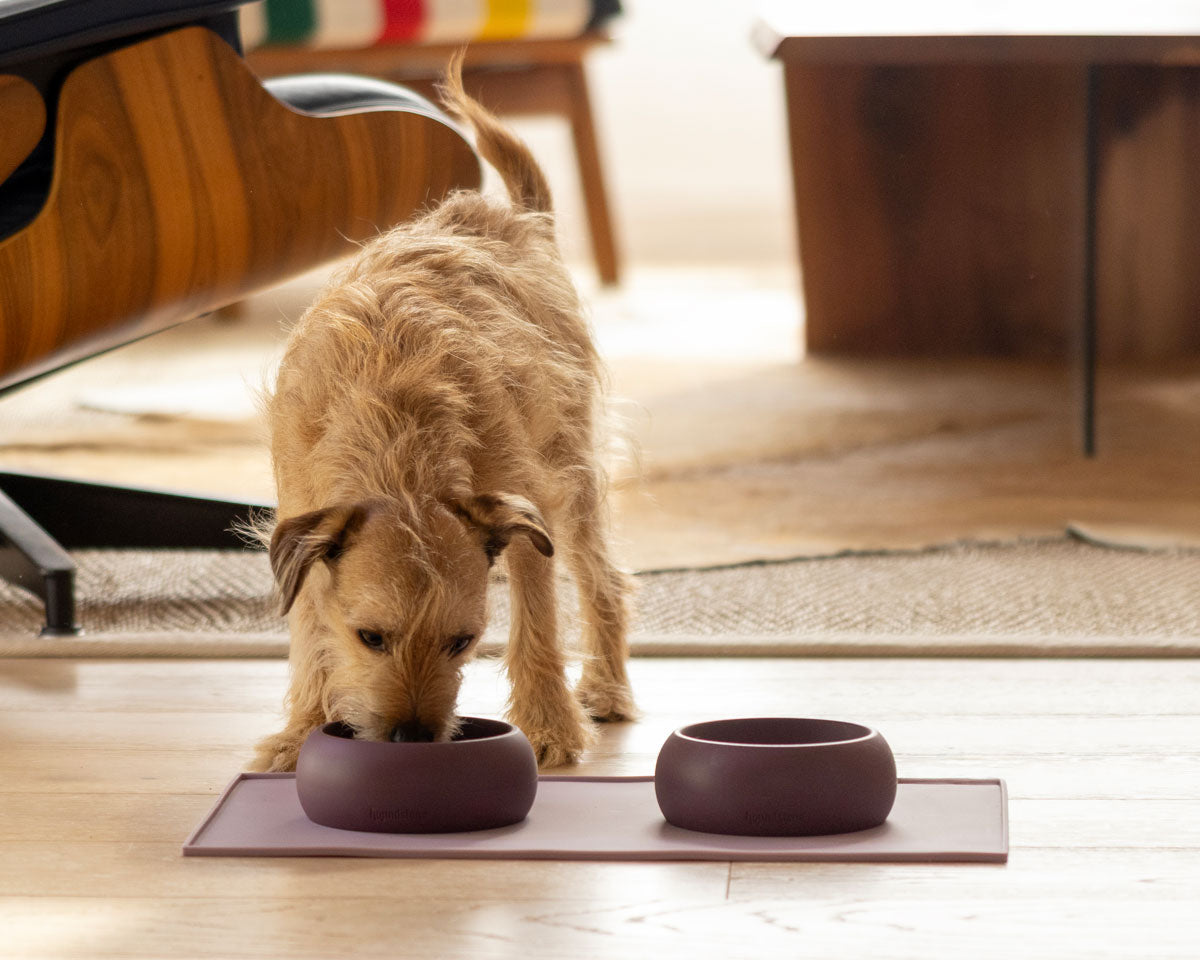
The Pony Silicone Dog Bowl: A Dog Bowl Named for Capone, Built for Real Life
Some dogs change your day-to-day. Pony changed our standards. Pony was short for Capone—our rescue Jack Russell Terrier, and the “C” in ADC Houndstone & Co. He was a tough man. Grumpy, sometimes, and full of love on his terms. But he was also kind, with a deep, steady soul you could feel the moment you slowed down enough to meet him where he was. He also never met a meal he didn’t love. And if you’ve lived with a dog like that, you know what comes next: bowls that scoot across the floor, water that ends up where it shouldn’t, and a feeding area that constantly needs resetting. At home, it’s frustrating. On the go—at the park, on a hike, traveling—it’s worse. So we designed a dog bowl that could keep up with real life, in all the places we actually take our dogs. Why we made our original dog bowl We weren’t trying to make a “better looking” bowl. We were trying to make a bowl that worked—quietly, reliably, every day. Pony needed a dog bowl that could handle: a dog who eats with gusto floors that don’t forgive sliding and splashing quick rinses between meals being tossed in a bag for the park travel days, trail days, and everything in between Most dog food bowls are fine until you’re living with them. Then the small flaws become routine: noise, sliding, mess, breakage, or materials that don’t feel as considered as they should. We wanted to stop thinking about the bowl entirely. That was the goal. Silicone was the practical answer We chose silicone because it fit the reality of how pet parents live: Lightweight and flexible for travel and outdoor use Unbreakable for busy homes (and clumsy moments) Easy to wipe down so crumbs don’t linger Dishwasher safe for straightforward cleanup Microwave safe for convenience when you need it Non-slip base to help reduce sliding and spills It’s a material choice rooted in function, not trend. And it let us keep the design calm: modern, simple, and meant to disappear into daily life. A dog food bowl for home, park, hiking, and travel The Pony dog bowl is made to work in the places dogs actually eat: in the kitchen, without the bowl drifting across the floor on a patio, where outdoor surfaces make sliding worse at the park, where you want something light and easy to rinse on the road, where convenience matters and cleanup should be quick on hikes, where a bowl needs to pack down and bounce back A dog bowl should support the day you already have, not ask you to reorganize around it. Why naming matters here We name products after the animals who shape our decisions. Not as a marketing move—but as a reminder of the standard we’re holding. Capone earned his place in our brand’s story because he was the kind of dog who makes you pay attention. The kind who asks you to be patient, to be consistent, to show up without needing anything in return. The Pony dog bowl is part of that same approach: care built into the everyday object. The kind you rely on quietly, and stop thinking about because it simply works. What to look for in dog food bowls (if you’re comparing) If you’re shopping for a dog food bowl, here are the practical filters that matter most: Stability: does it stay put when your dog eats fast? Cleanability: can you rinse it quickly, and does it wash well over time? Material trust: is it food-grade, BPA-free, and built for daily use? Durability: will it crack, chip, or dent with normal life? Portability: can you bring it to the places you actually go? These are small requirements. But together, they decide whether a bowl becomes part of an easy routine—or a daily annoyance.
Learn more
Cat Bowls and Cat Food Mats: The Simple Setup That Makes Mealtimes Easier
When we talk about silicone, we’re not talking about “trendy” materials. We’re talking about the material that makes the routine easier and more reliable, especially in homes where feeding happens multiple times a day.
Learn more
Dog Bowls That Stay Put: A Cleaner Feeding Routine with Silicone Bowls + Mats
That’s the point of our dog bowl collection. Not more choices. Better ones. A set of silicone dog dishes built for real routines, paired with mats that keep the whole station steady.
Learn more