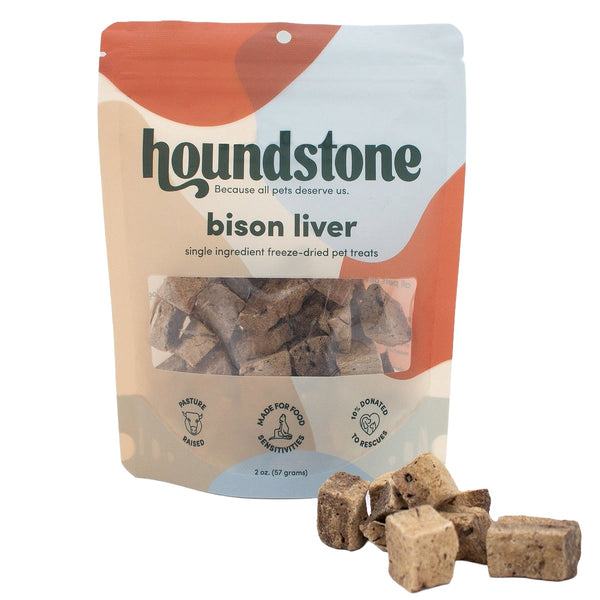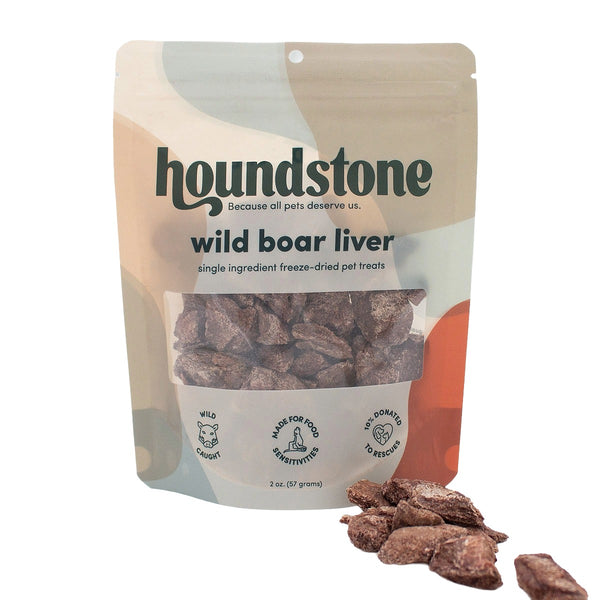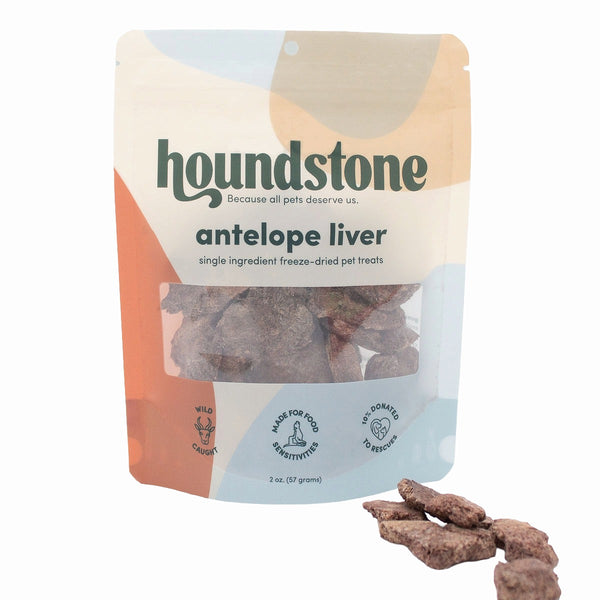
Freeze dried dog treats are frozen and dried under vacuum without cooking, while dehydrated dog treats are dried slowly with warm air. Freeze dried treats stay closer to raw in aroma and nutrition and are light and crumbly; dehydrated treats are denser and crunchier. Both can be wonderful choices. It really comes down to your dog's preferences, dietary needs, and how you plan to use them.
Key facts
- Freeze-drying removes moisture from frozen ingredients using a vacuum, helping preserve much of their natural flavor and nutrients.
- Dehydrating uses gently circulating warm air to slowly remove moisture, creating a firmer, denser texture.
-
Freeze-dried treats generally retain more heat-sensitive nutrients, while dehydrated treats offer concentrated flavor and nutrition.
- Both methods make treats shelf-stable by lowering moisture. Houndstone Bison Liver (freeze dried) lists 8% maximum moisture; Houndstone Mussel Crunch (dehydrated) lists 9%.
-
Freeze-dried treats are often made with a single protein, while dehydrated varieties may feature one or a few thoughtfully selected ingredients.
-
Freeze-dried treats typically cost more per ounce because the process takes more time and specialized equipment.
Freeze dried vs dehydrated at a glance
| Freeze dried | Dehydrated | |
|---|---|---|
| How water is removed | Frozen, then vacuum sublimation | Warm air over several hours |
| Heat | None to minimal | Low, sustained heat |
| Raw or cooked | Usually raw | Partly cooked by drying heat |
| Texture | Light, airy, crumbles easily | Dense, firm, crunchy or chewy |
| Aroma | Strong, close to fresh meat | Milder, roasted |
| Rehydrates in water | Quickly | Slowly |
| Typical ingredients | Often one protein | One to a few ingredients |
| Price per ounce | Higher | Lower |
| Best for | High-value training, toppers, picky eaters | Everyday rewards, longer chewing |
How Is Freeze-Drying Different From Dehydrating?
The biggest difference is how moisture is removed from the ingredients.
Freeze-drying begins by freezing the meat, then placing it in a vacuum chamber where the ice turns directly into vapor. This gentle process helps preserve the ingredient's natural shape, aroma, and nutrients without the high temperatures used in traditional cooking.
Dehydrating takes a different approach, using warm, circulating air to slowly draw out moisture. As the ingredient dries, its texture becomes firmer and its flavor more concentrated, creating the satisfying crunch many dogs love.
Both methods allow treats to stay fresh without relying on added preservatives when properly processed, packaged, and stored.
Which Preserves More Nutrition?
Both freeze-dried and dehydrated treats can offer excellent nutritional value, particularly when they're made with high-quality ingredients.
Freeze-drying generally preserves more heat-sensitive nutrients because it uses lower temperatures. Dehydrated treats are also naturally nutrient-dense, with concentrated protein and flavor. For example, Houndstone Chicken Crunch, one of our dehydrated treats, contains a minimum of 75% crude protein.
Ultimately, what goes into a treat matters just as much as how it's made. Whether freeze-dried or dehydrated, we believe simple, thoughtfully sourced ingredients are always a good place to start.
What About Food Safety?
Both freeze-drying and dehydrating are established methods of preserving food by removing moisture. The important thing is choosing treats made with quality ingredients and appropriate food safety practices.
Because freeze-drying and dehydration aren't necessarily designed to eliminate bacteria on their own, responsible manufacturers may use additional safety measures during production.
For dog parents, proper storage, clean hands, and choosing a brand you trust are simple ways to help keep treat time safe.
For more information, explore our guide, Are freeze dried dog treats safe?
When to Choose Freeze-Dried Treats
Freeze-dried treats are wonderfully versatile and can be especially useful for:
- Training: the strong smell keeps attention, and pieces break small.
- Picky eaters: crumble over meals as a topper.
- Food sensitivities: single-ingredient novel proteins make it easy to avoid triggers. See Novel protein dog treats.
- Seniors and small dogs: they soften quickly in warm water.
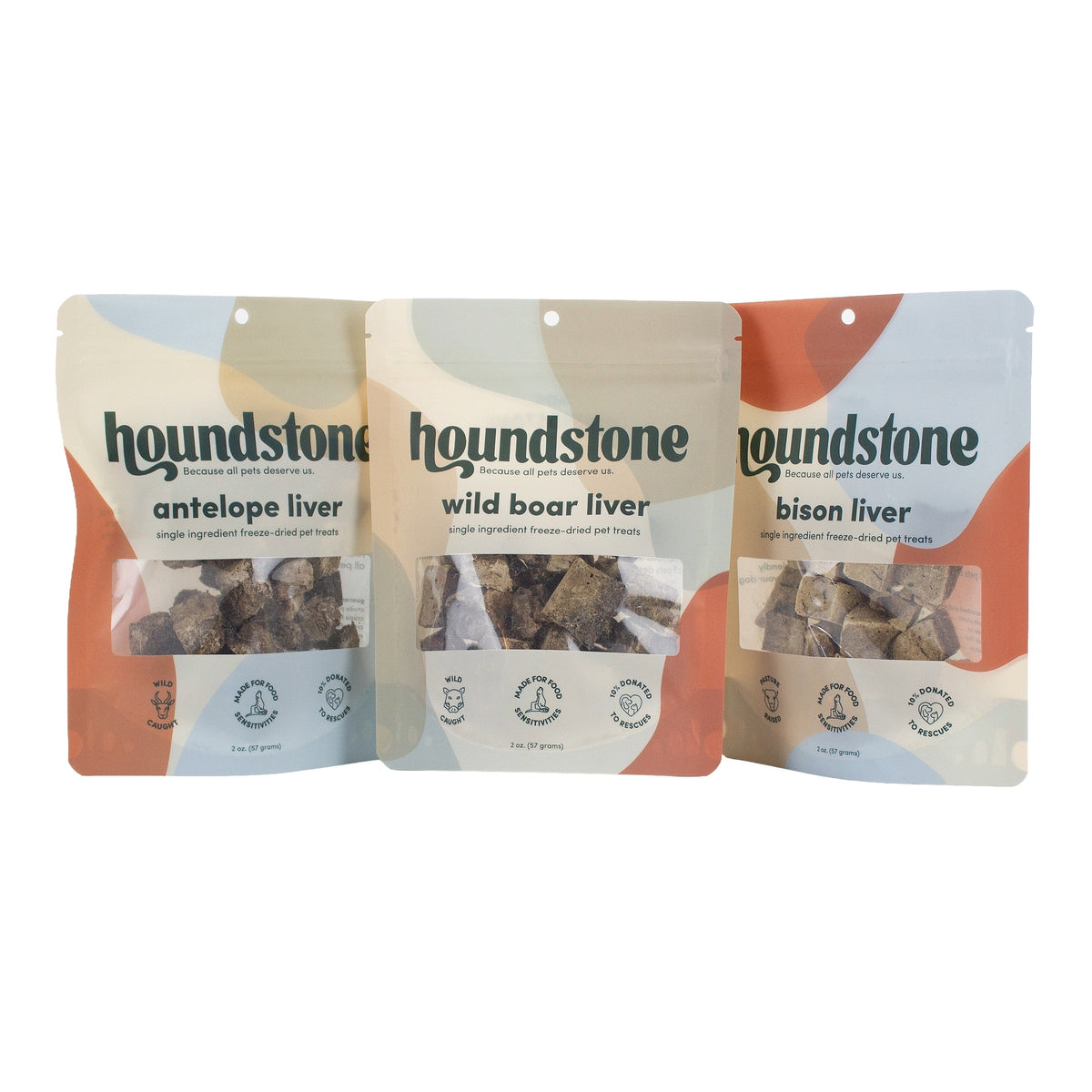
Shop Houndstone freeze dried dog treats: antelope liver, wild boar liver, bison liver, red tail deer, venison hearts and duck hearts.
When to choose dehydrated treats
- Everyday rewards: a lower price per ounce for frequent treating.
- Crunch lovers: a firmer bite that takes longer to eat.
- Cooked preference: for households that prefer a heat-dried product.
- Lighter rewards: Houndstone Mussel Crunch has 190 kcal per bag.
Shop Houndstone dehydrated dog treats: Chicken Crunch (chicken and blueberries) and Mussel Crunch (mussels, blueberries and kelp).
Houndstone treats compared
| Treat | Method | Ingredients | Crude protein (min) |
|---|---|---|---|
| Bison Liver | Freeze dried | Free-range bison liver | 60% |
| Wild Boar Liver | Freeze dried | Wild boar liver | 70% |
| Duck Hearts | Freeze dried | Duck hearts | 52% |
| Chicken Crunch | Dehydrated | Chicken, blueberries | 75% |
| Mussel Crunch | Dehydrated | Mussels, blueberries, kelp | 58% |
For a full overview of freeze dried treats, including portion sizes and storage, read Freeze dried dog treats: the complete guide.
Sources
- Freeze-drying (overview of the process)
- Food drying (overview of dehydration)
- Cornell University Riney Canine Health Center: Raw foods for dogs, evidence-based advice
Last updated November 2026. Product figures are from each product's guaranteed analysis.