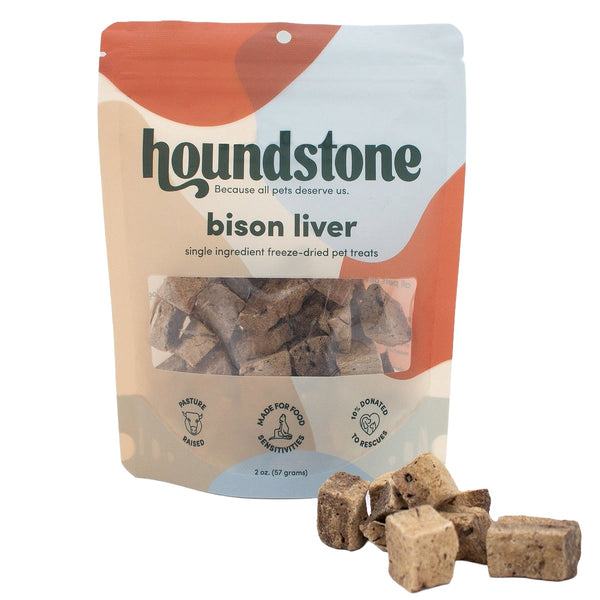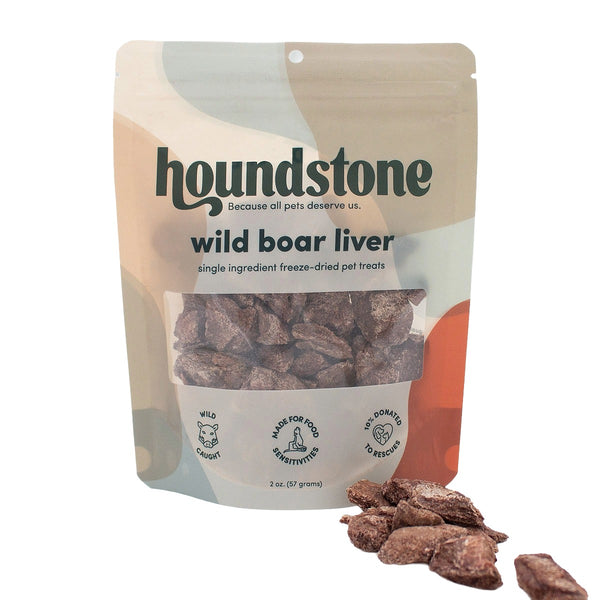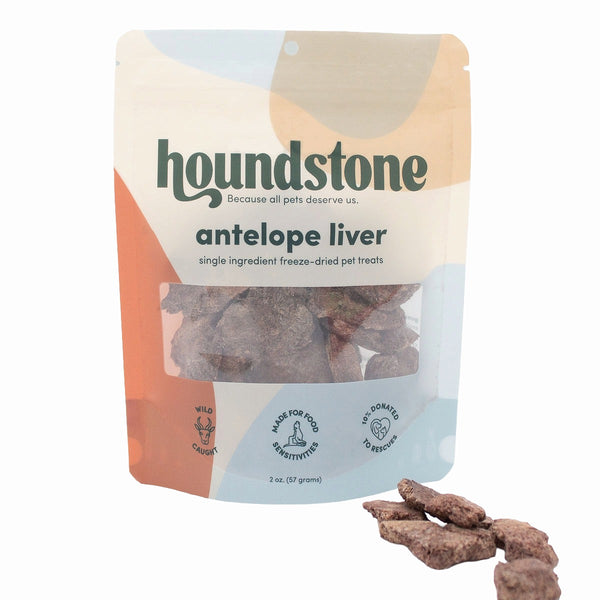
Freeze dried dog treats are made with real meat or organs and gently dried to remove moisture, they retain much of the natural flavor, aroma, and nutrients that make meat so appealing to dogs.
Freeze dried dog treats are wonderfully simple. Many freeze-dried treats contain just one ingredient, making them a good choice for dog parents who want to know exactly what they're feeding their dogs.
- In this guide, we'll explain how freeze-dried dog treats are made, what makes them different from other treats, and what to look for when choosing the right ones for your dog.
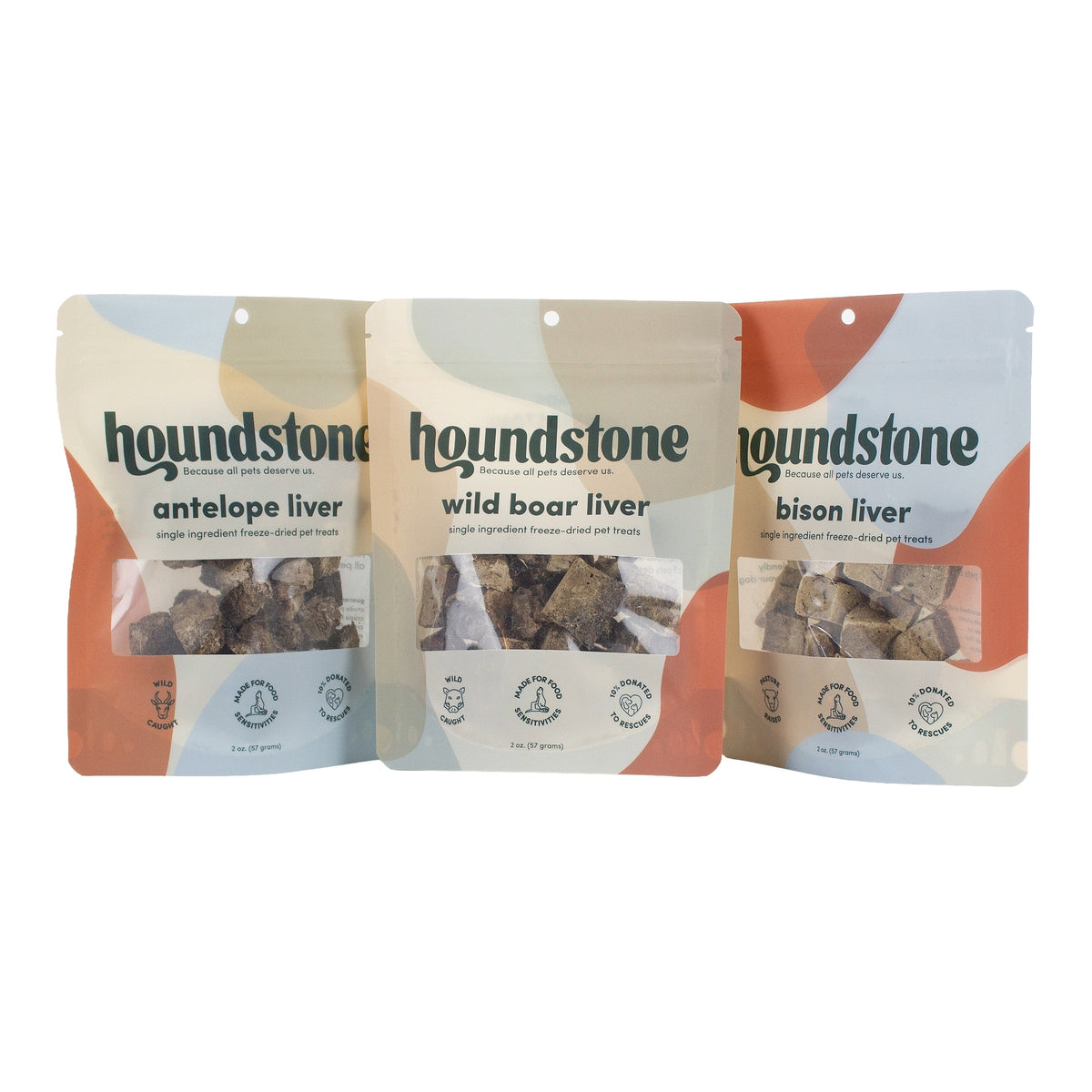
At Houndstone, we make single-ingredient freeze dried dog treats using thoughtfully sourced animal proteins, including antelope liver, wild boar liver, bison liver, red-tail deer, venison hearts, and duck hearts. We believe good treats don't need to be complicated.
Key Facts About Freeze-Dried Dog Treats
- A gentle preservation process. Freeze-drying removes moisture from frozen food at low temperatures, helping preserve much of the meat's natural flavor, aroma, and nutritional value.
- Long-lasting freshness. With very little moisture remaining, properly packaged freeze-dried treats can be stored at room temperature without added preservatives. Houndstone's Bison Liver treats, for example, contain a maximum of 8% moisture.
-
A little goes a long way. Treats should generally make up no more than 10% of your dog's daily calories, leaving plenty of room for a complete and balanced diet.
-
Simple ingredients. Single-ingredient treats make it easier to know exactly what your dog is eating. Treats made with less common proteins can also be useful for dogs with certain food sensitivities, provided they tolerate that protein.
-
Naturally rich in protein. Depending on the variety, Houndstone's freeze-dried dog treats contain 52% to 93% minimum crude protein, with approximately 198 to 295 calories per 2 oz bag.
What Are Freeze-Dried Dog Treats?
Freeze-dried dog treats are made by removing nearly all the moisture from meat, organs, or other ingredients through a specialized drying process. What's left is a lightweight, shelf-stable treat that retains much of the original ingredient's natural character.
Unlike many conventional dog treats, which may contain grains, starches, fillers, or added flavors, single-ingredient freeze-dried treats can be as simple as a piece of liver or heart. Nothing extra is needed.
Organ meats are especially popular because they're naturally rich in nutrients and have a distinctive aroma that dogs tend to love. This makes freeze-dried treats particularly useful for training, rewarding good behavior, or adding a little variety to mealtime.
Removing the moisture also makes the treats much lighter than fresh meat. That means a small bag can contain a surprising number of pieces, especially when they're broken into smaller training rewards.
How Are Freeze-Dried Dog Treats Made?
The process sounds more complicated than it really is. Freeze-drying is simply a way to remove moisture while preserving much of what makes the original ingredient appealing.
It happens in three main steps:
-
First, the meat is frozen. The ingredient is frozen until the moisture inside it turns to ice.
-
Next, the moisture is gently removed. The frozen meat is placed in a vacuum chamber, where carefully controlled heat allows the ice to turn directly into vapor without first becoming liquid. This process is called sublimation.
-
Finally, the remaining moisture is removed. A second drying stage removes additional moisture, leaving a lightweight treat that can stay fresh at room temperature when properly packaged and stored.
Because freeze-drying uses relatively low temperatures, it helps preserve much of the meat's original flavor, aroma, and nutrients without the high heat typically used in baking.
The finished treats often have a light, slightly porous texture. Many can be broken into smaller pieces for training or softened with a little water, depending on how your dog prefers to enjoy them.
One helpful distinction: freeze-dried doesn't automatically mean raw. The term describes how moisture is removed, not whether the ingredient was cooked before drying.
Are Freeze-Dried Treats Good for Dogs?
For most healthy dogs, freeze-dried treats are a great choice when made with quality ingredients and given in moderation. Single-ingredient varieties offer a simple way to reward your dog without unnecessary fillers or additives.
Their natural flavor and aroma make them especially appealing for training, while novel proteins like antelope and wild boar can be good options for dogs with certain food sensitivities.
As with any treat, portions matter. Treats should complement a balanced diet, not replace it. And because freeze-drying alone doesn't eliminate all harmful bacteria, proper handling and storage are important.
For more information, read our guide, Are freeze dried dog treats safe?
Freeze dried vs dehydrated vs baked treats
| Freeze dried | Dehydrated | Baked | |
|---|---|---|---|
| How water is removed | Frozen, then vacuum sublimation | Warm air over hours | Oven heat |
| Cooked? | No | Usually low heat | Yes |
| Texture | Light, airy, crumbles | Dense, crunchy or chewy | Hard or crunchy |
| Typical ingredients | Often a single protein | One to a few ingredients | Flours, binders, flavorings |
| Best for | High-value training, toppers, sensitive dogs | Everyday rewards, chewing | Occasional snacks |
For a deeper comparison, read Freeze dried vs dehydrated dog treats.
Which protein should I choose?
Start with a protein your dog has not eaten much before, especially if they have shown signs of a food sensitivity. In a review of 297 dogs with food reactions published in BMC Veterinary Research (2016), the most commonly reported sources were beef (34%), dairy (17%), chicken (15%) and wheat (13%). Proteins like antelope, wild boar, bison and venison are rare in commercial dog food, which is why they are called novel proteins. Learn more in Novel protein dog treats.
| Houndstone treat | Cut | Crude protein (min) | Calories per 2 oz bag |
|---|---|---|---|
| Antelope Liver | Liver | 66% | 233 kcal |
| Wild Boar Liver | Liver | 70% | 227 kcal |
| Bison Liver | Liver | 60% | 244 kcal |
| Red Tail Deer | Deer | 93% | 198 kcal |
| Venison Hearts | Heart | 81% | 215 kcal |
| Duck Hearts | Heart | 52% | 295 kcal |
Liver is rich in vitamins and minerals and has the strongest aroma, so it works well for training. Heart is a lean muscle meat with a firmer texture.
How many freeze dried treats can my dog have?
Keep all treats to about 10% of your dog's daily calories. The American Kennel Club notes that the 10% refers to calories, not the number of treats. Because freeze dried treats are calorie-dense, break them into small pieces for training. Every Houndstone bag lists its calories (from 198 to 295 kcal per 2 oz bag), so you can portion accurately. Your veterinarian can tell you your dog's daily calorie needs.
How to Feed Freeze-Dried Treats
-
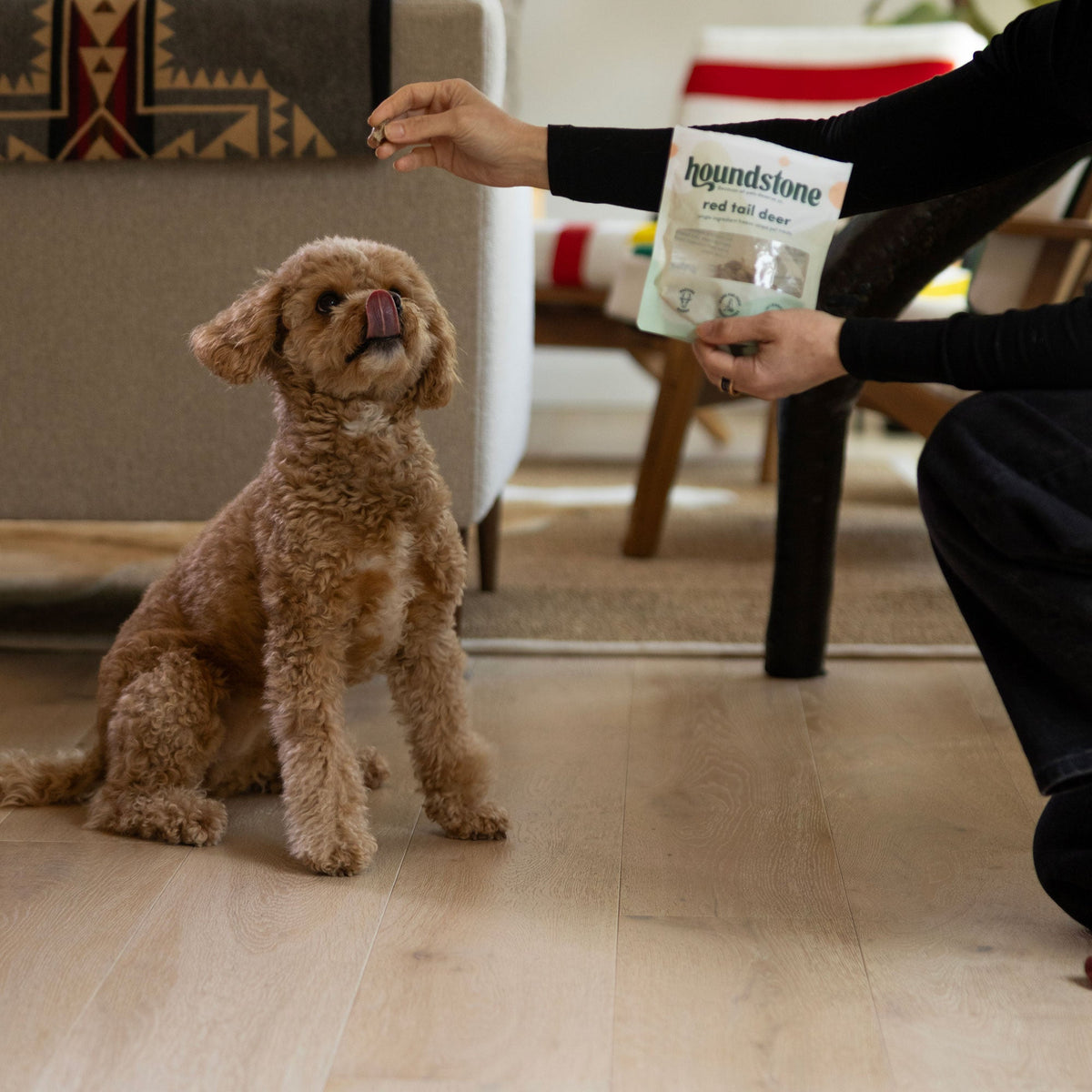
For training: Break treats into small, pea-sized pieces for rewarding good behavior. A little goes a long way.
-
As a meal topper: Crumble a few pieces over your dog's regular food for extra flavor and protein. You can also try our dedicated dog food toppers.
-
Softened with water: Add a splash of warm water to soften treats for puppies, seniors, or dogs who prefer a gentler texture.
-
When trying something new: Introduce new proteins gradually, keeping an eye on your dog's digestion and any signs of sensitivity, such as skin or ear reactions.
How to Choose a Good Freeze-Dried Dog Treat
-
Keep ingredients simple. Look for treats made with a single, recognizable ingredient, without unnecessary fillers or additives.
-
Check the nutrition. Review the guaranteed analysis for protein, fat, moisture, and calorie content.
-
Look for thoughtful sourcing. Choose brands that are transparent about where their ingredients come from and where their treats are made.
-
Consider food safety. Look for brands that follow appropriate food safety practices, including testing for harmful bacteria.
-
Choose what works for your dog. If your dog has food sensitivities, consider a novel protein they haven't eaten before, with guidance from your veterinarian when needed.
How to Store Freeze-Dried Dog Treats
Keep treats in their original bag, sealed tightly and stored in a cool, dry place away from direct sunlight. Moisture can affect their freshness and texture, so be sure to close the bag after each use. If treats become unexpectedly soft or damp, it's best to discard them.
About Houndstone Freeze-Dried Dog Treats
At Houndstone, we believe good treats begin with good ingredients. Our single-ingredient freeze-dried dog treats are made in the USA using USDA-certified meats in FDA-registered facilities. We carefully select pasture-raised, wild-caught, and field-harvested proteins, including some sourced through USDA-certified mobile processing units that allow animals to be processed without transportation.
Our approach comes from years of caring for our own rescue dogs and fosters, many with food allergies and sensitive stomachs. We wanted treats made with ingredients we could feel good about feeding them, without anything unnecessary added.
Shop all freeze dried dog treats or, if your dog prefers a crunch, browse our dehydrated dog treats.
Why Are Freeze-Dried Dog Treats More Expensive?
It takes quite a bit of fresh meat to make a small bag of freeze-dried treats. Removing moisture reduces the weight significantly, while the slow, specialized drying process requires more time and energy than traditional baking or dehydrating.
The result is a lightweight, nutrient-dense treat made with real meat. Curious about the difference? Read our guide freeze dried vs dehydrated dog treats.
Sources
- Cornell University Riney Canine Health Center: Raw foods for dogs, evidence-based advice
- Mueller RS, Olivry T, Prélaud P. Common food allergen sources in dogs and cats. BMC Veterinary Research, 2016
- American Kennel Club: How many treats can your dog have?
- U.S. FDA: Get the facts, raw pet food diets can be dangerous to you and your pet
Last updated November 2026. This guide is general information, not veterinary advice. Talk to your veterinarian about your dog's diet.